If you’re planning a family holiday in France and hesitating between a hotel, an apartment, or a private villa, the decision becomes much easier once you know what to check. A villa isn’t “automatically better”—it’s ideal when it matches how your family actually lives: sleep schedules, meal routines, noise levels, and how much downtime you need.
The simple way to judge value is to translate “villa benefits” into booking decisions: enough space to avoid tension, child-safe outdoor areas, real privacy (not just “quiet”), and a location that doesn’t turn every outing into a long drive.
Your family villa checklist (read this before you book)
- Space: separate bedrooms + a living area you can actually use with kids.
- Safety: clear pool protection, secure garden, stairs/terraces that work for your children’s ages.
- Daily life: practical kitchen, laundry option, and basic baby gear if you need it.
- Privacy: outdoor space that’s truly private, not overlooked or shared.
- Location: quick access to groceries, activities, and medical help—without losing the “holiday feel”.
What Makes a Private Villa Ideal for a Family Holiday in France?
Direct answer: A private villa is ideal for a family holiday in France when it gives you real space, child-friendly safety, privacy, and self-catering flexibility—without putting you too far from everyday essentials like shops and activities.
A “private villa” (for holiday rentals) usually means you rent a whole house for your group, with your own kitchen and living areas. That’s different from a hotel (shared building and shared rules) or a guesthouse/B&B (often shared spaces and fixed routines).
The key benefit isn’t luxury—it’s control. With kids, control often means you can eat early, keep nap time, spread out toys, and avoid worrying about disturbing other guests.
Cas pratique
Imagine a family of four with two young children. In a hotel room, bedtime can mean lights out for everyone and whispered conversations in the dark. In a villa with two bedrooms and a living room, the kids can sleep while the parents still have a normal evening—without “tiptoeing” around other guests or paying for an extra room just to get quiet.
It also helps to know that rentals are not a niche choice in France. Insee data on French accommodation choices notes that in 2025, private rentals, gîtes and guesthouses’ share of French residents’ overnight stays accounted for 17.3% of French residents’ overnight stays, ahead of hotels (16.8%). This doesn’t prove a villa is “best,” but it does show many families choose rental-style stays.
How this becomes a booking decision: don’t search for “the perfect villa.” Instead, decide what must be true for your family to feel comfortable—then only shortlist villas that clearly meet those points in the listing and in writing.
Space, Privacy and Child-Friendly Equipment: The Essentials
Before you compare prices, compare fit. A family-friendly villa in France is one where the layout works for your children’s ages and your daily rhythm—especially mornings, nap time, and evenings.
How much space does your family actually need?
As a parent, you’ll feel the difference when you have at least: separate sleeping space for adults and children, one shared indoor area (living/dining) that doesn’t double as a bedroom, and an outdoor spot where kids can play while you stay close.
- With a baby/toddler: look for a calm bedroom setup plus a living area where you can keep lights low during naps.
- With school-age kids: a garden or pool area can become the “play zone,” which keeps the house calmer.
- With teens: extra privacy matters—separate rooms and decent Wi‑Fi become practical, not “nice to have”.
What child-safety features should you check?
If the villa has a pool, don’t treat safety as a vague promise. In France, rules apply to private in-ground pools: they must have an approved anti-drowning safety device (such as a barrier, alarm, cover, or shelter), under the Code de la construction et de l’habitation, with potential fines for non-compliance.
To see the legal framing (and what counts as a compliant device), use French pool safety legal requirements from the DGCCRF (Ministry of Economy). Then, when you book, ask the owner/agency to confirm which device is installed and whether it’s operational.
Pool safety reality check: even with a compliant device, young children still need active supervision—so prioritise villas where you can see the pool from the terrace or main living area.
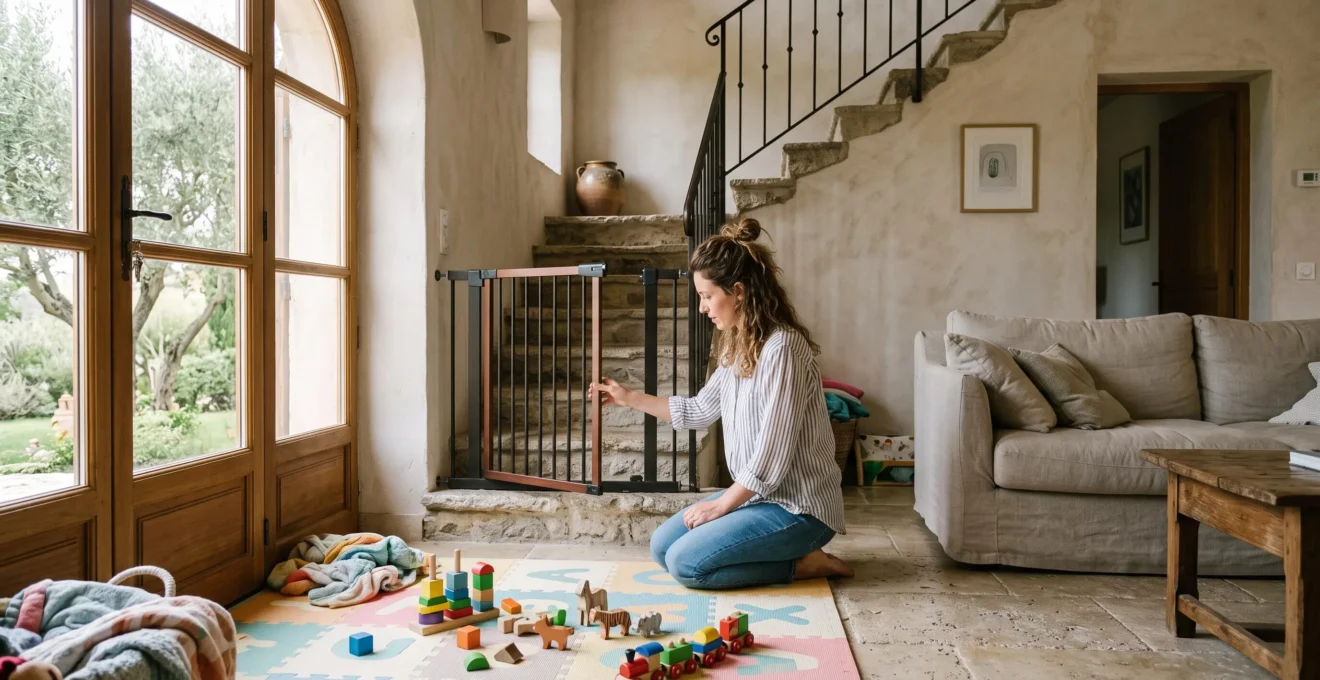
Other practical safety checks (especially with toddlers) include: a fenced garden or outdoor area, stairs where you can use a gate, and terraces/balconies that don’t create obvious climbing hazards. Listings won’t always spell this out—so it’s normal to ask for clarification.
Which child-friendly equipment is genuinely useful?
Equipment only adds value if it matches your kids’ ages and your packing limits. For many families, the big “stress reducers” are simple: a high chair, a cot/travel crib, a washing machine, and a kitchen that lets you do fast meals.
- Kitchen basics: fridge space, pans you can actually use, and a dining setup that works for children.
- Laundry: washing machine (and ideally a place to dry things), because kids’ clothes add up fast.
- Sleeping: blackout options or quiet bedrooms can matter more than fancy décor.
What “privacy” means in a villa listing
Privacy is not just “a private house.” It can mean: no shared pool, no shared garden, and outdoor space that isn’t overlooked by neighbours or another rental next door.
Booking move: if privacy matters to you (for noise, naps, or just relaxing), ask one direct question: “Is any outdoor space shared or overlooked?” It saves misunderstandings later.
Where Should a Family Villa Be Located in France?
The “best” location is the one that protects your energy. With children, you’ll feel the difference between a beautiful villa that’s 25 minutes from groceries and one that’s 5 minutes away—especially when you arrive late or need supplies daily.
Which settings tend to work well for families?
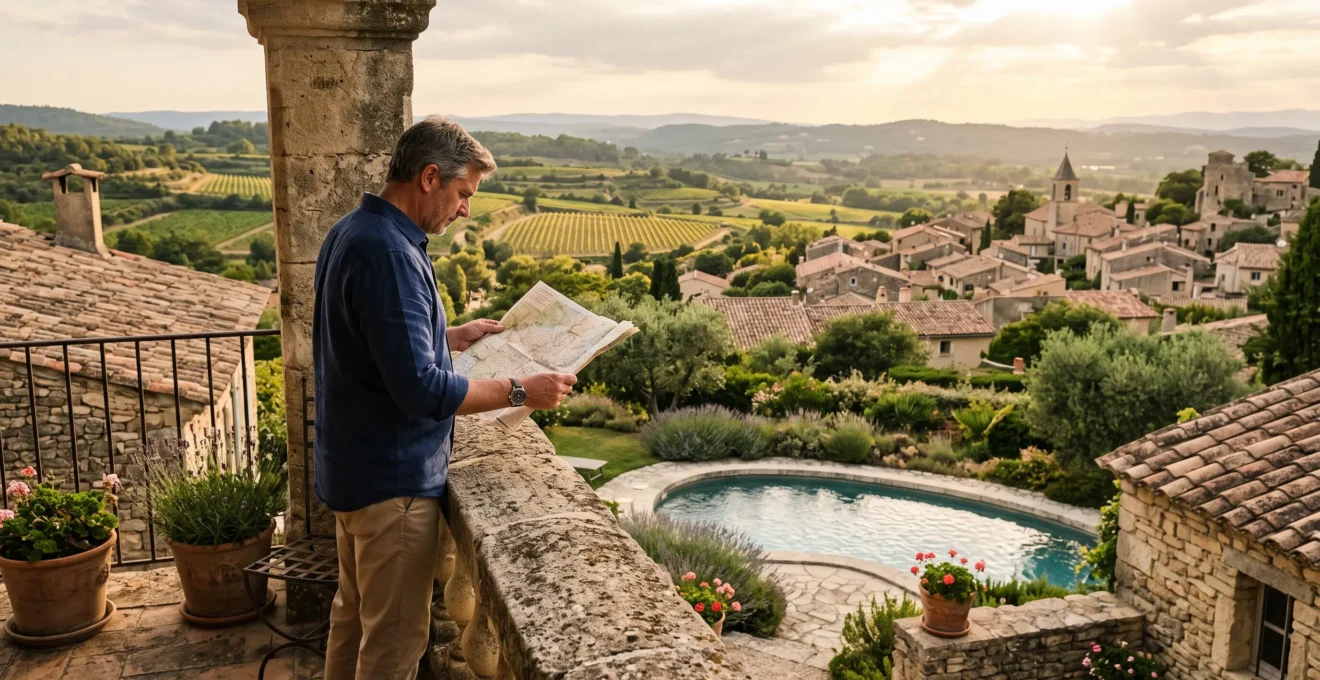
Families often choose between three common setups: coast (beach days and easy kid entertainment), countryside (space, quiet, and outdoor play), or village/near-town (walkable basics and less driving). Regions like Provence and the Loire Valley are frequently associated with villa-style stays and family sightseeing, but your best pick still depends on what you want to do each day.
If you want one high-level indicator of travel demand patterns, rental accommodation growth in France from Atout France notes rental accommodation rose strongly in 2024 (including +16.4% for international overnight stays). This doesn’t tell you where to stay, but it supports the idea that many travellers are actively choosing rentals.
What “close enough” looks like in real life
A family villa location works when you can reach essentials without turning every errand into a trip. Before booking, check (or ask about) realistic driving times to: a supermarket or bakery, a pharmacy, child-friendly activities, and a medical service. You don’t need to over-plan—just avoid being isolated by accident.
- If your kids are happiest outdoors all day:
Choose countryside or vineyard settings with a secure garden and easy day trips.
- If you want “zero-planning” entertainment:
Choose a coastal area or near a lake/river with short, repeatable outings.
- If you hate driving every day:
Choose a villa near a village or small town so you can walk to basics.
How to think about arrival logistics (without overcomplicating it)
For a smooth family holiday in France, try to minimise “hard moments”: late arrivals, hungry kids, and long last-mile drives. It helps to choose a villa with a straightforward arrival route from your likely airport or train station and to plan your first grocery stop.
Practical rule: if you expect to arrive near dinner time, prioritise a location where you can buy food easily on arrival day—so the first evening doesn’t turn into a crisis.
Balancing Family Time and Personal Space on Holiday
A private villa can be great with kids because it lets you be together without being on top of each other. That’s often what parents mean when they say, “We want a holiday too.”
How does a villa help everyone recharge?
Look for layout “zones”: bedrooms that allow early bedtimes, a living area where adults can talk normally, and outdoor space that’s safe enough for supervised play without constant “no, don’t touch that.”
Villas also tend to support flexible routines. Instead of planning your day around breakfast slots or housekeeping schedules, you can keep the rhythm that works for your children—especially helpful with naps and picky eating.
Cas pratique
Imagine a typical afternoon: one child naps in a quiet bedroom, another plays outside within sight of the terrace, and the parents take a real break—one reads, the other preps a simple snack. It’s not “perfect,” but the space makes the day feel less like constant coordination.
Villa vs hotel for families: when is the villa worth the cost?
A villa is often worth the cost when it replaces add-ons you’d otherwise pay for (extra rooms, eating out for every meal, paid laundry) or when it prevents the “holiday friction” that can ruin a week—noise stress, no nap-friendly space, and nowhere for kids to play safely.
A hotel can still be the better choice if you want daily cleaning, on-site services, and zero responsibility for meals. The point isn’t that one option wins—it’s that your family priorities should decide.
| Decision point | Private villa | Hotel |
|---|---|---|
| Meals with children | Self-catering; flexible meal times | Restaurant hours; less control |
| Space during naps/bedtime | Separate rooms can reduce stress | Often limited unless you book multiple rooms |
| Noise and privacy | More privacy if outdoor space is truly private | More shared areas; quieter options vary |
| Daily logistics | You manage groceries and basics | More services on-site |
If you’re weighing a villa stay against other travel styles, you might also like this perspective on solo travel as a mother, which helps clarify what “rest” and autonomy look like when you travel with family responsibilities.
How to Plan a Smooth Family Villa Stay in France
The easiest way to avoid overpaying is to book like a parent, not like a tourist: decide your non-negotiables first, then verify them in writing before you confirm.
- Set your must-haves before you look at photos
Write 5 bullets: bedrooms, pool (yes/no), fenced outdoor space, laundry, and distance to shops. This prevents “pretty place” bias.
- Turn your must-haves into direct questions
Ask about what listings often hide: pool safety device type, whether the garden is enclosed, and whether any space is shared or overlooked.
- Check location in practical terms
Confirm time to groceries and your key activities, and think about your arrival time (late arrival = easier access matters more).
- Plan day-one basics
Decide how you’ll eat the first evening and what you’ll do if children are tired. A simple “arrival meal plan” prevents stress.
- Pack for rhythm, not for perfection
Bring what supports your routine: bedtime items, a familiar snack plan, and outdoor basics. The villa provides space; you provide the comfort cues.
What should you ask the owner or agency before confirming?
Keep it short and specific. A good message often covers: exact bed setup, what baby/toddler equipment is available (if needed), pool safety device details (if there’s a pool), Wi‑Fi reliability (if you need it), and check-in details for late arrivals.
Simple rule: if a detail is critical for your kids’ safety or sleep, don’t assume—ask and get a clear answer before you pay.
Once you’ve checked space, safety, privacy, and location, you’ll know whether a private villa for a family holiday in France is genuinely worth it for your situation—or whether a hotel (or another rental type) fits better. Your goal isn’t to “choose the fanciest option,” but to choose the one that makes the week feel easy.
Is a private villa worth the cost compared to a hotel?
It’s usually worth it when the villa gives you space you’d otherwise pay for (extra rooms) and flexibility that reduces daily stress (self-catering, naps, outdoor play). If you want services and zero meal planning, a hotel may fit better.
What safety features should a villa have for young children?
Prioritise a secure outdoor area, stairs that can be gated, and clear pool protection if there’s a pool. In France, private in-ground pools must have an approved anti-drowning safety device—ask what is installed and how it’s used in practice.
How can we balance family time and personal space in a villa holiday?
Choose a layout with separate bedrooms and a living area that stays usable after children go to bed. A safe garden/terrace also helps kids play nearby while adults get a real break.
What should we check before booking a villa with kids?
Check four things: space (sleep + play zones), safety (especially pool and outdoor areas), daily-life equipment (kitchen and laundry), and location (access to groceries and activities). If a detail matters, ask directly and confirm before you pay.
Use the checklist from the start of this article as your filter: if a villa doesn’t clearly meet your family’s space, safety, privacy, and location needs, keep looking. The right place won’t just look good—it will make your days easier from the first evening.